Inside the Panel: Risk Check: The Automation Audit Guide

Monthly Automation insight at a glance. This month:
Guide to Automation Audits (And Why You Need One)Download the PDF

Automation audit picWhy The “If It Ain’t Broke” Strategy is a Ticking Time Bomb

From $20,000-per-minute failures to musical air valves—here is why you need to check your systems this January.


The Cautionary Tale: The $50 Billion Problem

We get it. “Auditing” sounds like something the tax man does. But in manufacturing, the “ostrich strategy”—burying your head in the sand until a breakdown happens—is costing the industry billions.

Recent data suggests that unplanned downtime costs industrial manufacturers a staggering $50 billion annually. In high-stakes sectors, a single stopped line can burn through $22,000 to $50,000 per minute.

The Real Danger: The most common culprit isn’t a catastrophic explosion; it’s obsolescence. More than 50% of facilities are currently running on control systems that are over a decade old. When that legacy PLC finally quits, you aren’t just paying for a replacement; you’re paying for days of silence while you scour the internet for a part that hasn’t been manufactured since 2010.

The Success Story: Modernizing a Historic Distillery

Audits aren’t just about finding problems; they are about unlocking potential.

Consider a heritage distillery that was recently running on a legacy control system. It offered almost no visibility into their process—operators were flying blind, reacting to issues only after they occurred. By auditing their needs and upgrading to a modern, open SCADA architecture, they didn’t just “fix” a broken process—they transformed it.

The new system gave them mobile-responsive control, real-time historical data access, and high-performance alarming. They moved from “keeping the lights on” to having deep, data-driven insights into their production batches. An audit was the first step in moving from surviving to optimizing.

On a Lighter Note: The “Vuvuzela” Valve

Sometimes, an audit reveals the “human touch” left behind by previous engineers.

One engineer on a site walkthrough noticed a peculiar note on an I/O drawing. A loud pneumatic vent solenoid had been originally labeled “VENT TO ATMOSPHERE.” But because of a kink in the airline, it made a deafening, trumpet-like noise every time it fired.

During a previous logic update, a cheeky programmer had officially renamed the output in the code to “VENT TO VUVUZELA.” It allegedly stayed that way for years, entertaining (or annoying) anyone who opened the cabinet.

The Lesson

You never know what “creative” logic or mechanical quirks are hiding in your panels until you actually look.

The 10-Minute Audit: Start Your Baseline

You don’t need a clipboard and a week of downtime to get started. You just need a baseline.

We built the Controls & Automation Checklist Generator to help you identify your specific risks—whether it’s an obsolete PLC, a “Vuvuzela” valve, or a safety curtain that’s seen better days.

How It Works:

  1. Select Your Hardware: Tick the boxes for the systems you actually have (PLCs, VFDs, HMIs).
  2. Get Your Red Flags: The tool generates a custom list of specific risks associated with your equipment.
  3. Walk the Floor: Use your custom list to catch the hidden risks before they become downtime statistics.

Try the Controls & Automation Risk Check →

Inside the Panel: A Clearer Look at Hazardous Locations

Monthly Automation insight at a glance. This month:
A Clearer Look at Hazardous Locations – Download the PDF


Hazardous Locations: Avoid the Guesswork

Operating in explosive or flammable environments demands precise equipment. Misunderstanding hazard ratings can lead to catastrophic failures, non-compliance, and severe penalties. A clear grasp of Class, Division, and Group classifications, along with protection types like Explosion-Proof

(XP) and Intrinsic Safety (IS), ensures your automation panels meet the stringent safety standards required.

Danger Defined

Different hazards, different protection. Craft Automation ensures your panels are built for the environment.

We’ve Seen the Risks—It’s Not Worth It

In many different operating facilities, we’ve witnessed the potential for issues when controls aren’t properly rated. A single spark in a dust-laden atmosphere or a faulty component near volatile chemicals can have devastating consequences. Understanding and implementing correctly rated controls is not just a best practice; it’s a vital proactive measure to prevent catastrophe.

Rising Industry Demand for Robust Solutions

Regulatory bodies are increasing their scrutiny of equipment in hazardous locations, impacting various industries from brewing and food processing to water treatment and biochemical facilities. In response, OEMs are proactively adopting robust solutions, integrating explosion-proof (XP) and intrinsically safe (IS) protection during the design phase to ensure both safety and operational integrity.

Customized Hazard Report

Don’t leave your facility exposed to hazards or non-compliance. Use our Hazard Location Analyzer to identify your application’s requirements and see how Craft Automation delivers tailored automation solutions for hazardous environments.

Use the Hazard Location Analyzer


Ready to strengthen your safety systems?

Contact Craft Automation to review your setup and ensure every panel meets hazardous-location standards.

Inside the Panel: Small Details. Big Impact. Smart Panels for OEMs

Monthly Automation insight at a glance. This month:
Small Details. Big Impact. Smart Panels for OEMs – Download the PDF


Quick take: Terminal blocks

(The unsung hero in panels)

Every minute of downtime costs money. By using terminal blocks with removable jumpers and clear labeling, field techs can pinpoint issues in seconds instead of hours – minimizing costly production delays. It’s a small design choice with outsized ROI (especially for OEMs supporting remote sites).

Visual of the Month

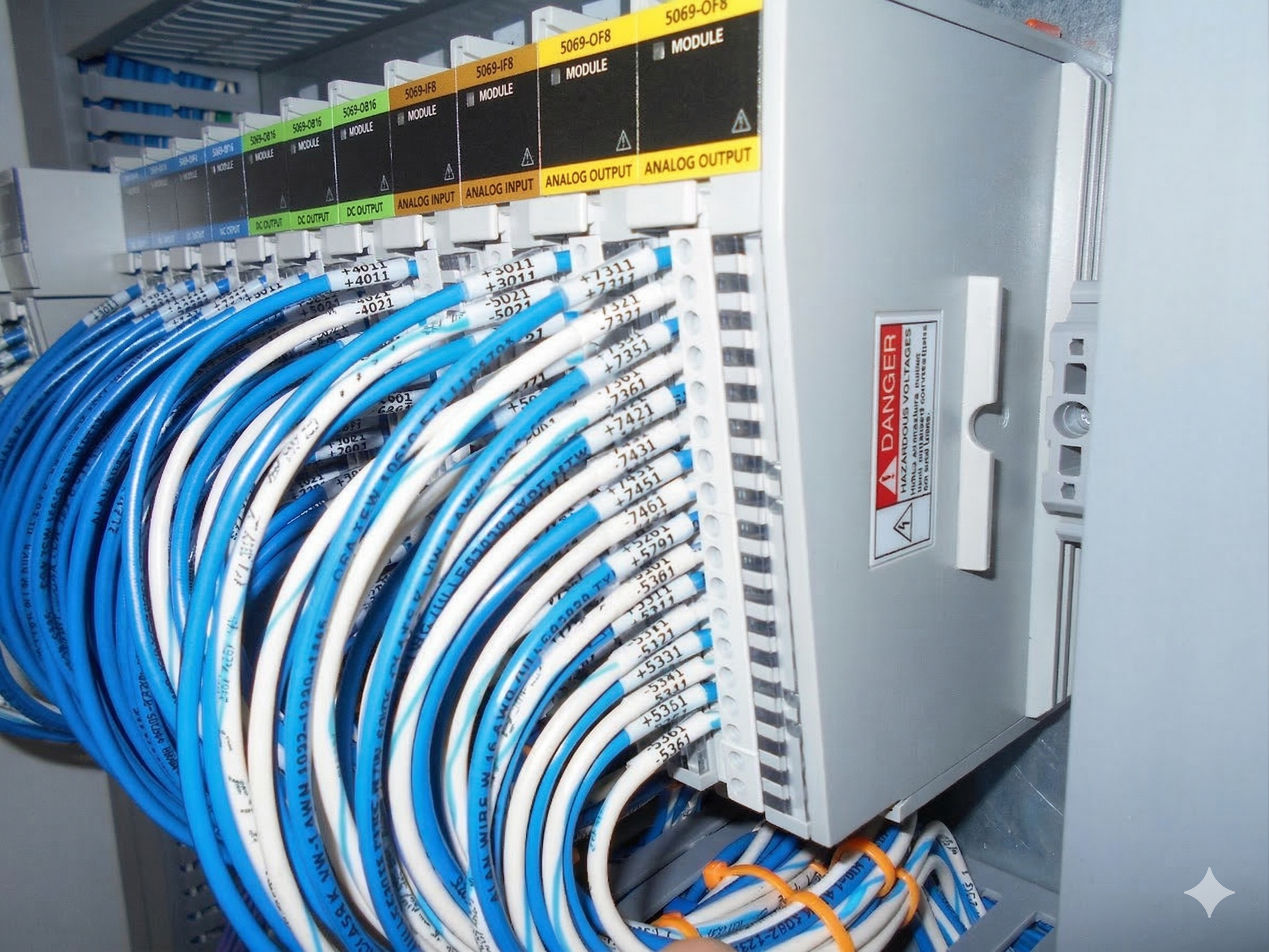
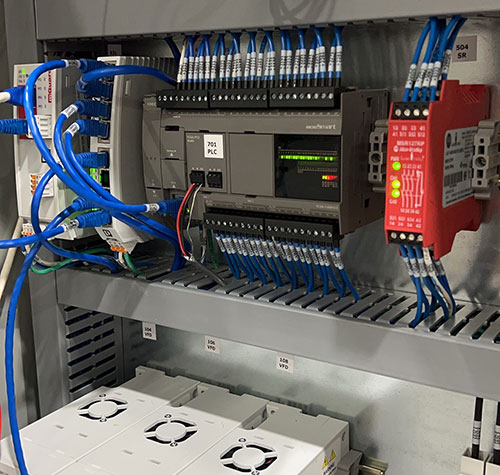
Every extra minute spent tracing wires in the field is lost productivity. Clear labels, smart spacing, and logical layouts aren’t cosmetic – they’re the first line of defense against downtime.

Field Lesson: Smarter Layout, Faster Results

In a recent retrofit for an OEM, our redesign cut commissioning time by 16 hours. That’s two extra shifts of production they didn’t lose. Even better – future field techs can now verify wiring in seconds with a glance at the DIN rail layout. A cleaner panel isn’t just neater – it’s measurable savings.

Industry Watch: Labor Shortages Demand Simplicity

Across the industry, skilled technicians are in short supply – and training takes time. OEMs are now prioritizing panel designs and HMI logic that can be understood on Day 1. The winners will be those who make service simple, intuitive, and foolproof.


Working on a New Build?

Before you lock in your next panel spec, a 30-minute design consult could save you days in the field – and thousands in downtime. Let’s talk now, before the costs show up later.