
Heat Transfer (HTST)
High-temperature short-time processing systems that rapidly heat and cool products while maintaining quality and safety.
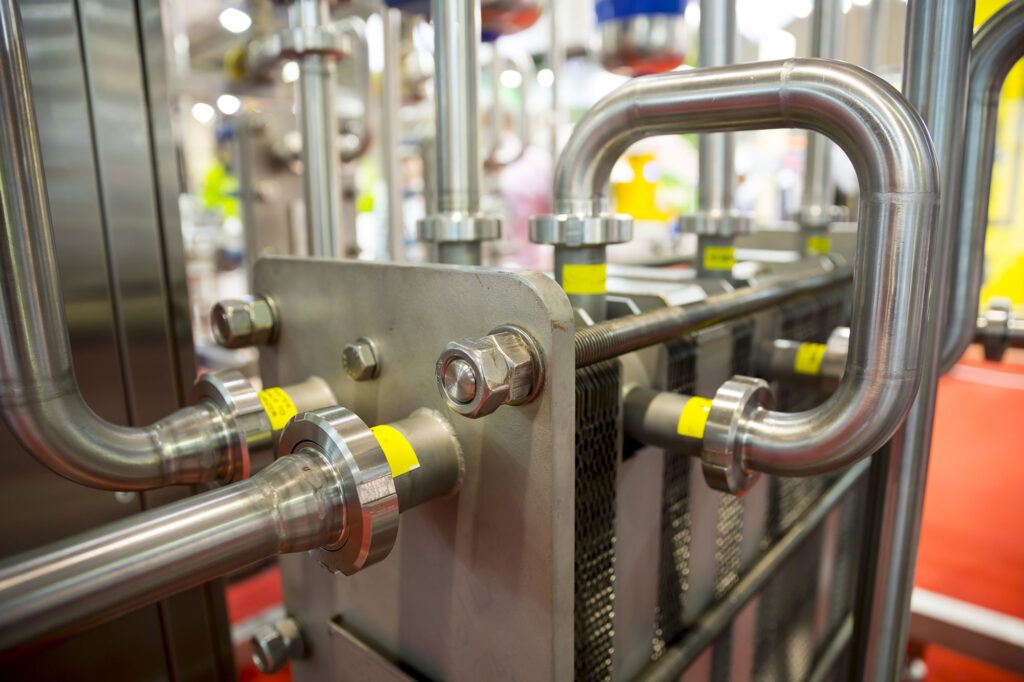
Product Overview
High Temperature Short Time (HTST) heat exchangers provide rapid thermal processing for continuous pasteurization, sterilization, and cooking applications. These systems heat products to precise temperatures for exact time periods, then rapidly cool them to preserve quality while achieving food safety or sterilization objectives. Our HTST systems feature advanced plate heat exchanger technology, precise temperature controls, and automated monitoring to ensure regulatory compliance.
Key Benefits
- Precise temperature control ensures pathogen destruction while preserving nutrition
- Plate heat exchanger design provides exceptional heat transfer efficiency
- Regeneration sections recover heat from hot product to preheat incoming product
- Compact footprint reduces installation space requirements
- Automated recording and monitoring for regulatory compliance
- Flow diversion valves prevent under-processed product release
- Reduced product degradation compared to batch processing
- Quick changeover between products minimizes downtime
- Low maintenance design reduces operational costs
Industries Served
-
 Dairy
Dairy
-
Juice & Beverage
-
 Brewing
-
 Liquid Egg Processing
-
 Sauces & Condiments
-
 Pharmaceuticals
-
 Alternative Proteins
-
 Plant-Based Beverages
Compliance Capabilities
- FDA Pasteurized Milk Ordinance (PMO)
- 3-A Sanitary Standards, USDA compliance
- FSMA Preventive Controls
- cGMP requirements
- EU Regulation 853/2004
- HACCP validation support
Product Breakdown
- Plate HTST Systems: Gasketed plate heat exchangers (10-500 GPM) with regeneration, heating, cooling, and holding tube sections achieving 161-185°F pasteurization with 15-30 second hold times and 85-95% thermal efficiency through regeneration
- Tubular HTST Systems: Shell-and-tube or triple-tube designs for viscous or particulate products (sauces, purees, soups) providing gentle heating at 10-200 GPM with reduced pressure drop and fouling compared to plate systems
- UHT (Ultra-High Temperature) Systems: Direct steam injection or indirect heating systems achieving 280-302°F for 2-6 seconds producing shelf-stable products with aseptic packaging capability and extended ambient storage life
- Aseptic Processing Systems: Complete HTST/UHT lines with sterile holding, homogenization, and aseptic filling producing commercially sterile products in pre-sterilized containers with 6-12 month shelf life without refrigeration
- Pilot HTST Units: Small-scale systems (1-20 GPM) for product development, process optimization, and shelf-life testing featuring modular design and adjustable process parameters for R&D applications
- CIP-Integrated HTST: Systems with automated CIP sequencing, including caustic, acid, and sanitizer cycles with flow verification and return-to-service validation ensuring food safety between production runs
Technical Details
- Plate Heat Exchangers: 316L stainless steel plates with EPDM or FKM gaskets, chevron or herringbone patterns optimizing turbulence, heat transfer areas from 5-500 sq ft with thermal efficiencies up to 95% through counter-current flow design
- Heating Media: Hot water (180-200°F), culinary steam (15-30 PSI), or direct steam injection providing rapid temperature increase (50-100°F per second) with modulating control valves maintaining ±1°F accuracy at pasteurization temperature
- Holding Tubes: Calculated-length stainless steel tubing (typically 1"-4" diameter) providing 15-30 second residence time at pasteurization temperature with multiple RTD sensors (every 5-10 feet) validating minimum time-temperature exposure
- Flow Diversion Valves: Pneumatic 3-way sanitary valves (1"-6" sizes) with spring-return fail-safe positioning automatically diverting under-temperature product to balance tank with <1 second response time and position verification
- Temperature Monitoring: Indicating and recording thermometers (IRT) with ±0.5°F accuracy, chart recorders or paperless recorders documenting continuous temperature profiles meeting PMO and FDA requirements for process verification
- Control Systems: PLC-based automation with touchscreen HMI managing product flow rates (VFD pump control), heating media modulation, CIP cycles, and alarm conditions with data logging and remote monitoring capabilities